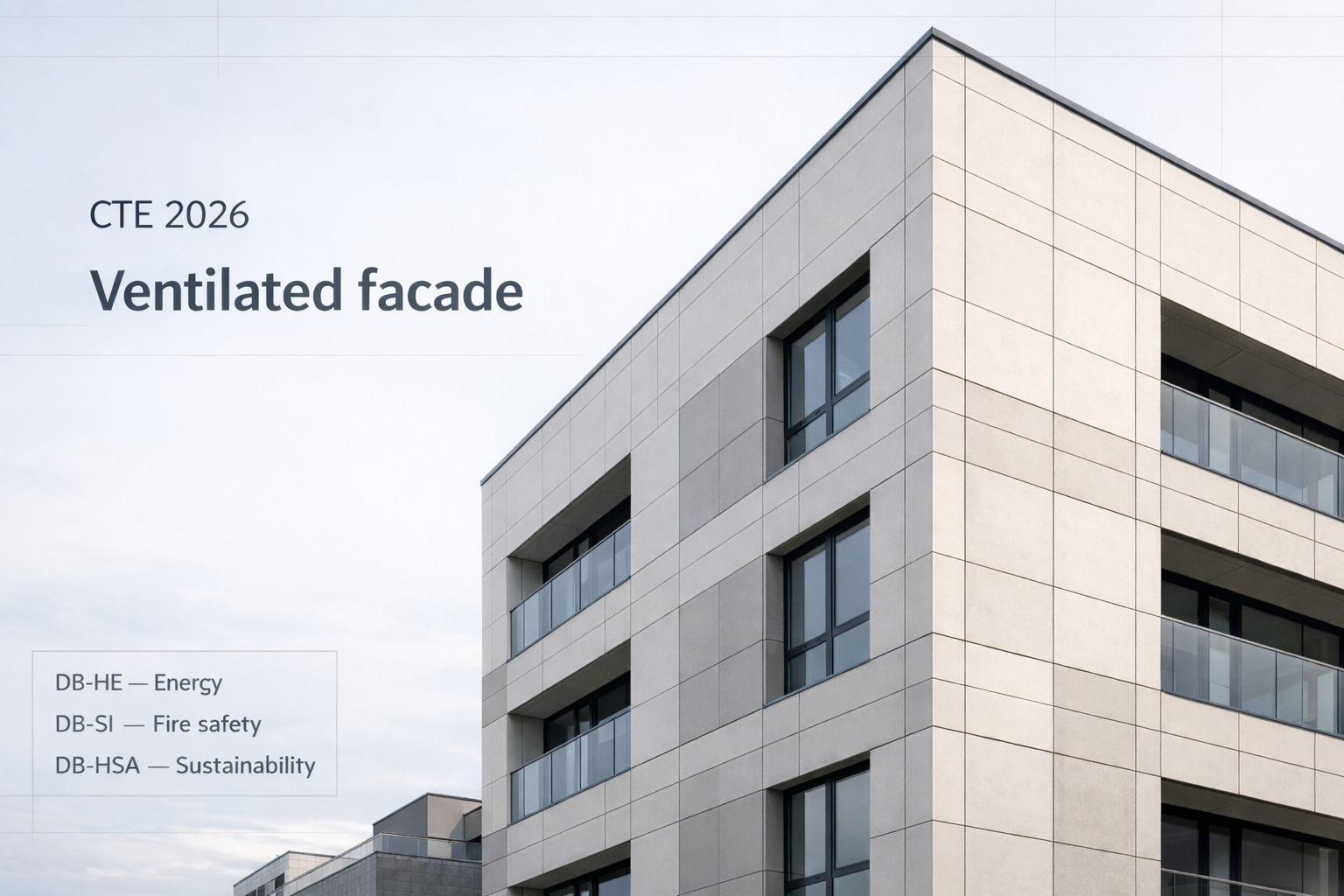
New CTE 2026: Key Changes in DB-HSA, Fire Safety and Energy Efficiency

Technical regulations are the backbone of architecture, yet interpreting them can sometimes be complex and demanding. However, staying up to date is by no means optional: major changes are on the horizon. The draft amendment to the Spanish Building Technical Code (CTE) is already on the table, and at FAVEKER®, we’ve analysed it in depth to explain what will change and, most importantly, how it will affect your façade projects.
The objective of this update is clear: to align Spain’s building stock with European requirements for decarbonisation and safety. In this article, we break down the three fundamental pillars of this amendment: the redefinition of energy efficiency, reinforced fire safety requirements and the introduction of measurable sustainability.
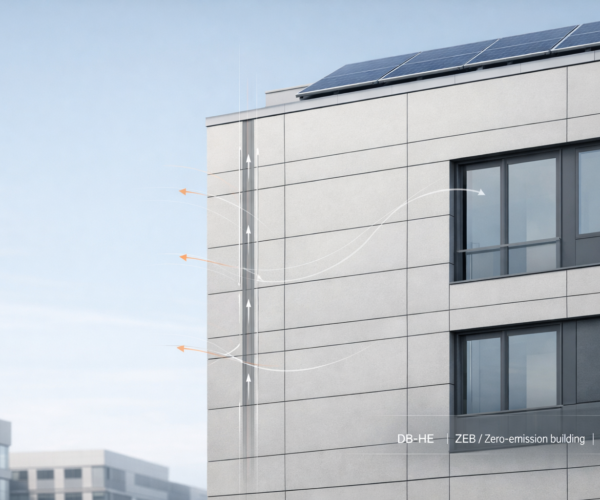
1. Energy Savings (DB-HE) and “Zero-Emission Buildings”
The new CTE officially introduces the definition of a zero-emission building: one with very high energy performance, requiring zero or a very low demand for energy and generating zero on-site carbon emissions as well as very low operational greenhouse gas emissions.
Although many consumption limit values remain unchanged, the most significant development for refurbishment projects and ventilated façades is the detailed definition of interventions affecting the thermal envelope.
What Is Considered a Substantial Modification of the Envelope Under the New CTE?
El borrador clarifica qué actuaciones activan el cumplimiento de las nuevas exigencias. Se detallan los siguientes supuestos:
The draft clarifies which actions trigger compliance with the new requirements. The following cases are specifically mentioned:
- Modifications to the construction build-up: including the replacement of the external façade layer, the addition of external thermal insulation (ETICS or ventilated façades) and internal linings or cavity insulation.
- The replacement or renewal of more than 50% of the envelope components or finishes. This includes the replacement of cladding, re-roofing work, full roof slope interventions, the replacement of waterproofing membranes, the renewal of roof finishes, as well as the repair and replacement of renders or multiple localised interventions.
- Surface treatments: primers or sprayed coatings with thermal insulation properties.
- The replacement of openings: changes to windows or external doors.
- Other interventions: any action that significantly alters the energy performance of the thermal envelope.
In addition, air permeability requirements are tightened. For buildings with mechanical ventilation systems featuring heat recovery, the n50 value in the new table is drastically limited to 1 h⁻¹, ensuring maximum system efficiency.
2. Fire Safety (DB-SI): More Demanding Façades
Fire safety in façades has been a critical issue, and the new CTE reinforces requirements for both façades and roofs to prevent external fire spread.
The required reaction-to-fire classes are modified for façade construction systems covering more than 10% of the surface area.
New Restrictions for Façades
The draft focuses particularly on External Thermal Insulation Composite Systems (ETICS). When a system’s reaction to fire is lower than A2-s1,d0, the installation of mineral wool fire barriers is mandatory. These barriers must be strategically positioned, with a minimum height of 30 cm as well as a minimum density of 60 kg/m³, and must be both bonded and mechanically fixed to the base substrate. The draft regulation provides specific instructions on properly positioning these fire barriers.
The Advantage of Ceramic Passive Fire Safety
Compared to the technical complexity of compartmentalising combustible materials or adapting existing roof assemblies, FAVEKER®’s ceramic solutions offer a robust response. The non-combustible nature of porcelain stoneware and its excellent fire reaction classification facilitate regulatory compliance without the need for complex compensatory measures on façades.
Furthermore, the new text allows compliance justification for buildings up to 28 metres in height through large-scale testing (according to British Standard BS 8414), validating innovative construction systems.
3. The Introduction of DB-HSA: Sustainability Is No Longer Optional
Finally, the new CTE 2026 introduces a structural change with the new Basic Document DB-HSA, “Environmental Sustainability”. Sustainability ceases to be an intangible value and will now be a quantifiable, mandatory technical requirement.
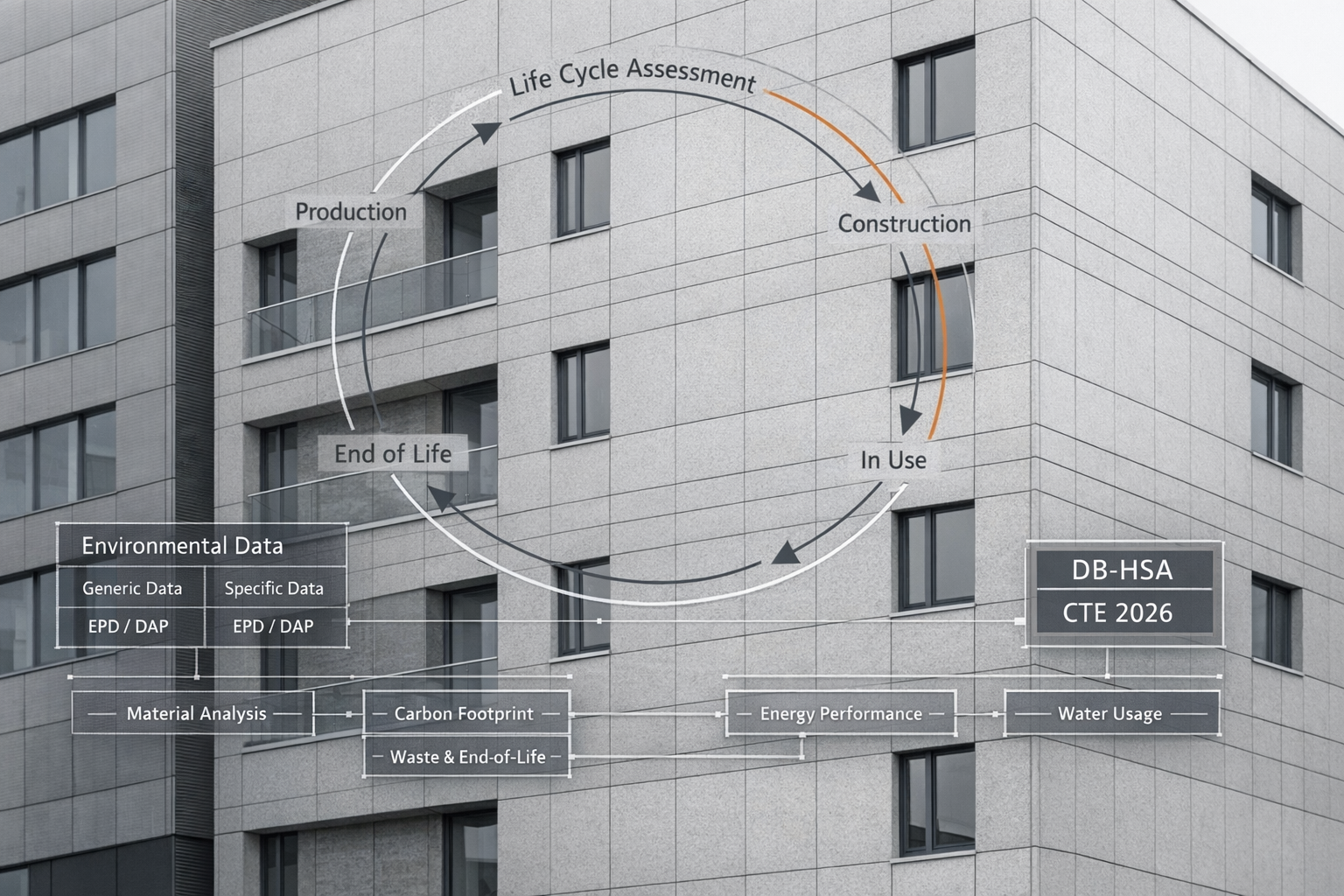
The key requirement of this document is calculating the Global Warming Potential (GWP) across the entire life cycle of the building (expressed in kg CO₂eq/m²). This represents a complete paradigm shift: evaluation is no longer limited to the building’s operational energy use, but also includes the embodied carbon of materials from manufacturing to end of life.
This GWP value must now be declared in the Energy Performance Certificate, broken down by stages: production, construction, use and end of life.
The proposed implementation timeline for the GWP indicator is progressive:
- 1 January 2028 for new buildings or extensions over 1,000 m².
- 1 January 2030 for all other cases.
How to Avoid GWP Calculation Penalties with EPDs?
The calculation methodology introduced by the new CTE includes a critical mechanism for designers: a correction factor. The regulation severely penalises uncertainty. A safety surcharge of up to 1.50 must be applied if GWP is calculated using generic database values, which will artificially increase your building’s carbon footprint by 50%.
However, the 2026 Building Technical Code rewards accuracy: when using product-specific data obtained through Environmental Product Declarations (EPDs), the correction factor is neutral, at 1.00.
This is where technical specifications become strategic. At FAVEKER®, we have our own EPDs certifying the real environmental impact of our ventilated façade systems. This allows you to calculate the exact CO₂ value for your project without penalties or unnecessary safety margins to facilitate compliance with DB-has right from the design phase. Our long-standing commitment to transparency and environmental certifications is now a direct advantage for your project.
Anticipating Change with FAVEKER® Technical Expertise
This amendment is no coincidence. The Spanish Ministry of Housing and Urban Agenda (MIVAU) has initiated this strategic revision of the CTE to align national regulations with ambitious European targets for sustainability, energy efficiency and safety by 2026. The update, marked by the new Sustainability Basic Document (DB-HSA) and reinforced fire safety requirements (DB-SI), is a response to the inevitable need to transpose European directives and adapt the sector to new social and technological demands.
In this context of transformation, FAVEKER® positions itself as your trusted technical partner. We’ve been working in this direction for years. Our ventilated façades not only deliver the aesthetics you’re looking for, but already incorporate the Environmental Product Declarations (EPDs) and fire reaction classifications required for your project to meet the all-new 2026 standards today.
Do you have any questions about how the new CTE will affect your next project? Contact our Technical Office: we will help you design an efficient, safe, cost-effective envelope which is fully aligned with future regulations.