
In contemporary architectural design, comfort is not simply defined by what you see or the temperature you feel, but also by what you stop hearing. In increasingly congested urban environments, acoustic insulation has become both a priority and a growing demand among users.
As experts in ceramic solutions, we understand that a building envelope must work like a multilayer shield. This article explains how a ventilated façade system can transform noise management and enhance indoor well-being.
How can you improve the sound insulation of a building with a ventilated façade?
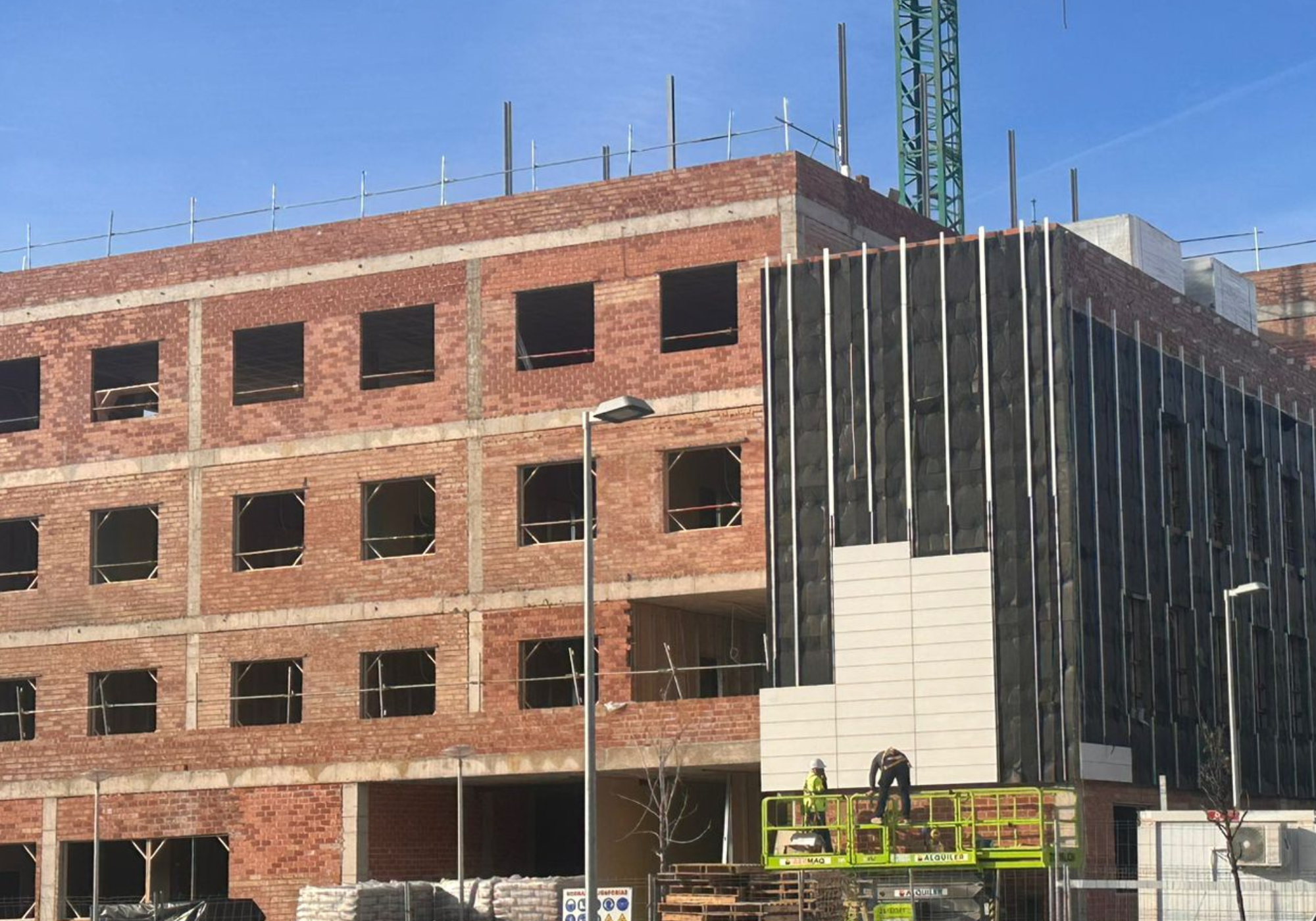
The effectiveness of a ventilated façade in reducing noise does not depend on any one material, but rather on the clever combination of three elements:
- External cladding
- An air gap
- The insulating material
This combination helps significantly reduce the transmission of airborne noise, such as road traffic, sirens and the hustle and bustle of shopping areas.
1. Exterior cladding: porcelain stoneware as a protective layer
The first line of defense against urban noise pollution is density. At FAVEKER®, we use high-quality extruded porcelain stoneware tiles that provide the system with substantial mass. Unlike other lighter or more porous cladding materials, our ceramic tiles have a compact and robust structure that offers natural resistance to vibration.
When sound waves strike the ceramic surface, the high density makes it difficult for them to resonate. This physical property leads to much of the sound energy being reflected outwards before it penetrates the structure.
2. Air chamber: the physical discontinuity spring
This element acts as a dynamic damper. In architectural acoustics, the continuity of materials is the fastest route for noise transmission. Therefore, physical discontinuity is created by separating the cladding from the main structure. This intermediate space interrupts the direct path of the sound waves. The air in the cavity absorbs and dissipates the energy from the vibrations that have managed to pass through the ceramic panel. This phenomenon reduces the sound pressure before it reaches the interior wall, drastically improving acoustic comfort for users.
3. Insulating material: absorption and elimination of acoustic bridges
While cladding reflects sound and the cavity dampens it, a layer of insulating material (such as mineral wool) attached to the supporting wall is responsible for the final absorption. The most widespread and effective solutions in ventilated façade systems are mineral wools, with two main types standing out:
- Rock wool: known for its excellent density and multidirectional structure, making it particularly effective at dissipating sound energy and offering exceptional fire resistance.
- Glass wool: its elasticity and lightness make it an ideal material for filling cavities, offering high performance in airborne noise absorption and excellent thermal stability.
This component is essential to eliminating acoustic and thermal bridges that could compromise well-being. In projects where silence is synonymous to health and quality of life, this layer of insulation makes all the difference.
The extruded ceramic cladding offers the first layer of protection and contributes to the system’s sound insulation, yet the overall performance depends on the construction solution as a whole. The result of combining these three elements (cladding, cavity and insulation) is a system that not only provides thermal protection but also ensures that external noise does not interfere with indoor activities all while meeting the most restrictive sustainability standards.
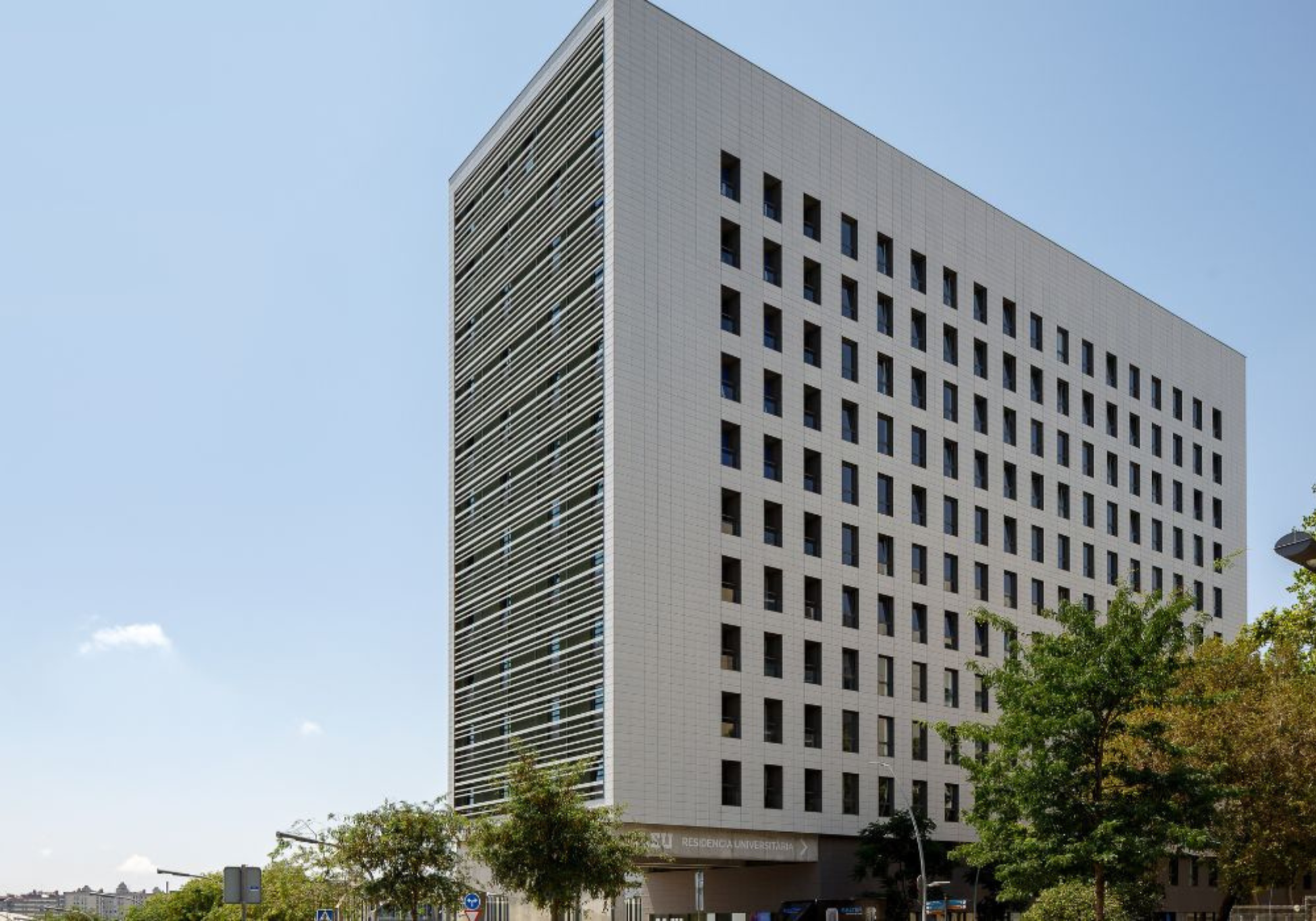
Benefits of ventilated facades in urban and high-traffic areas
Choosing a ventilated ceramic façade brings about a number of benefits for architectural projects located in areas with heavy traffic or in areas with leisure facilities given that it provides:
- Superior acoustic comfort: significantly improves residents’ quality of life by creating a calm environment, which is essential in shared living arrangements such as co-living or communal residences.
- Health and wellbeing: reducing constant noise is not just a luxury, but a documented health factor that lowers stress and improves rest.
- Added value: a property that guarantees silence inside is more valuable in today’s property market.
Regulations and technical requirements: the Technical Building Code (CTE)
In Spain, compliance with noise protection regulations is strict. Through its Basic Document on Noise Protection (DB-HR), the Technical Building Code (CTE) sets insulation limits to ensure that buildings are habitable and healthy.
Ventilated ceramic façade solutions facilitate compliance with these safety and health standards. In fact, the new European directive and updates to the CTE reinforce the need to use building materials and systems that reduce the transmission of airborne and impact noise between dwellings and the outside.
Acoustic comfort in buildings: from new builds to refurbishments
Silence is a sign of high-quality construction nowadays. Whether in new-build projects or building renovation work, ventilated ceramic façades stand out as one of the most comprehensive solutions.
Acoustics in new-build projects: designing with silence in mind
Incorporating a ventilated façade system in new-build projects allows the building envelope to be designed as a high-performance, multi-layered element. When designing from scratch, the combination of porcelain tiles and an air gap enables:
- Optimal compliance with the CTE, ensuring that the building exceeds the strict sound insulation limits from the outset.
- Superior thermal and acoustic insulation: as a comprehensive system, thermal and acoustic bridges are eliminated right from the construction phase.
- The prevention of indirect sound transmission thanks to the design of the substructure and the correct installation of fixings.
Renovation: transforming the comfort of existing buildings
One of the biggest challenges when renovating a building is improving its performance without altering the internal structure. Installing a ventilated façade in older buildings represents a significant step forward:
- Less external noise: many older buildings lack protection against urban noise pollution. By adding the ceramic cladding, insulation and air gap, noise transmission is significantly reduced.
- Higher property value: undertaking this improvement not only boosts energy efficiency but also adds esthetic and functional value, thereby increasing the property’s market value.
- Durability and low maintenance: refurbishing with ceramics ensures that acoustic comfort remains unchanged for decades thanks to the resistance of the materials to the elements.
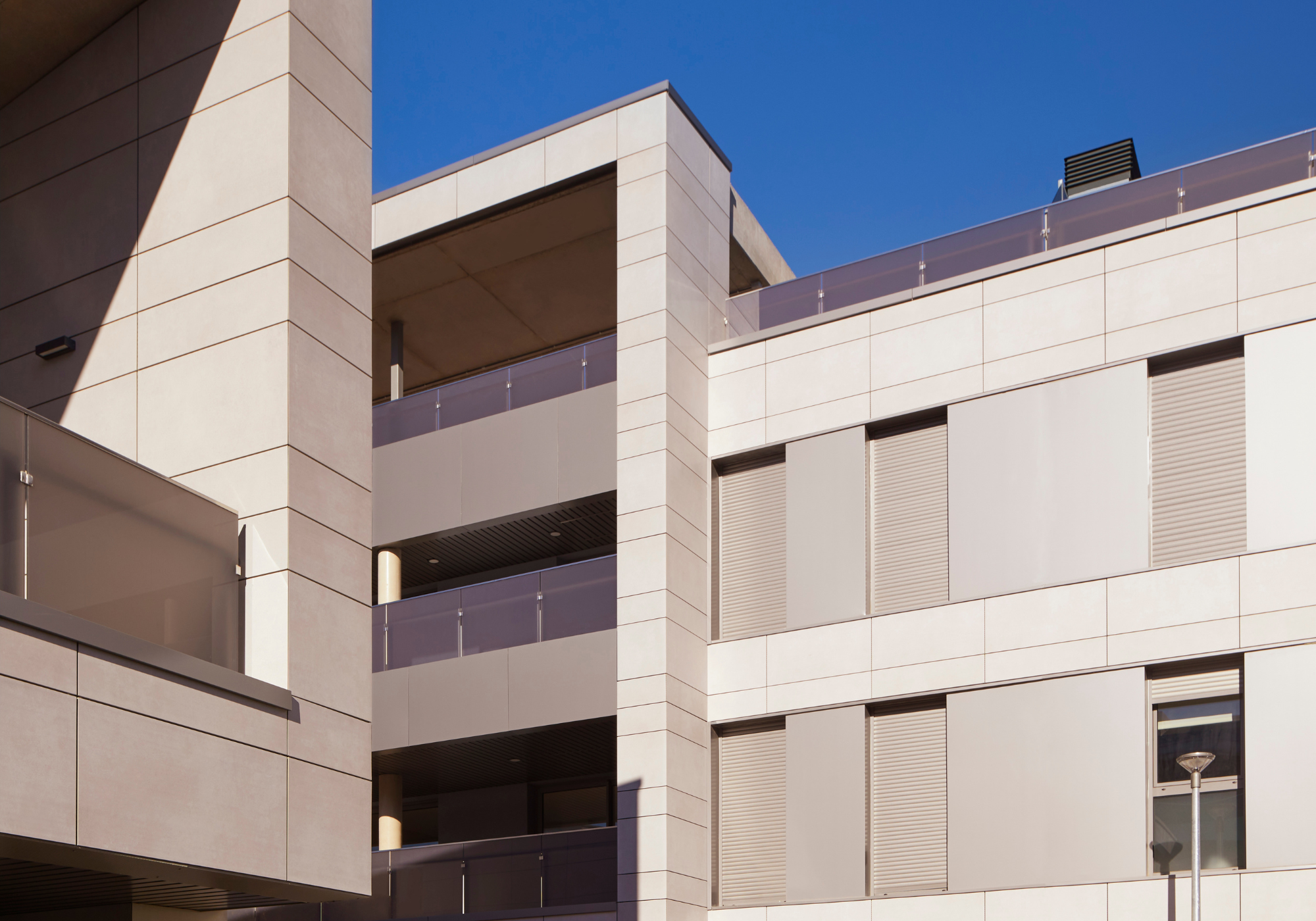
Value-added architectural solutions with FAVEKER®
Investing in a ventilated ceramic façade is not just an esthetic or energy-related decision; it’s a commitment to the health of the building’s occupants. In an increasingly noisy world, the barrier effect of our extruded porcelain stoneware systems guarantees superior sound insulation.
Do you need technical advice on insulation for your next project? Contact our Technical Department and we’ll help you design an efficient, quiet and durable building envelope.