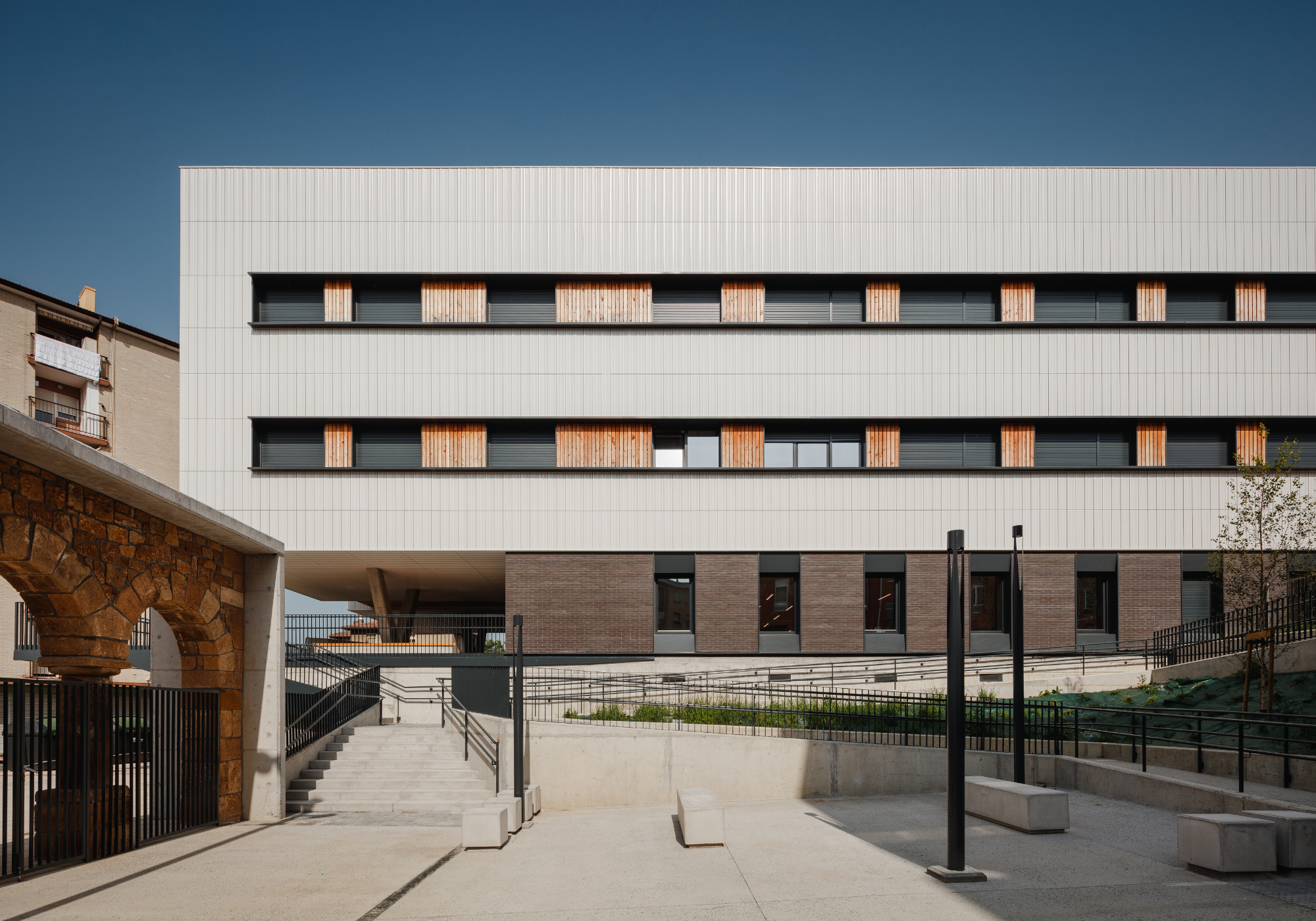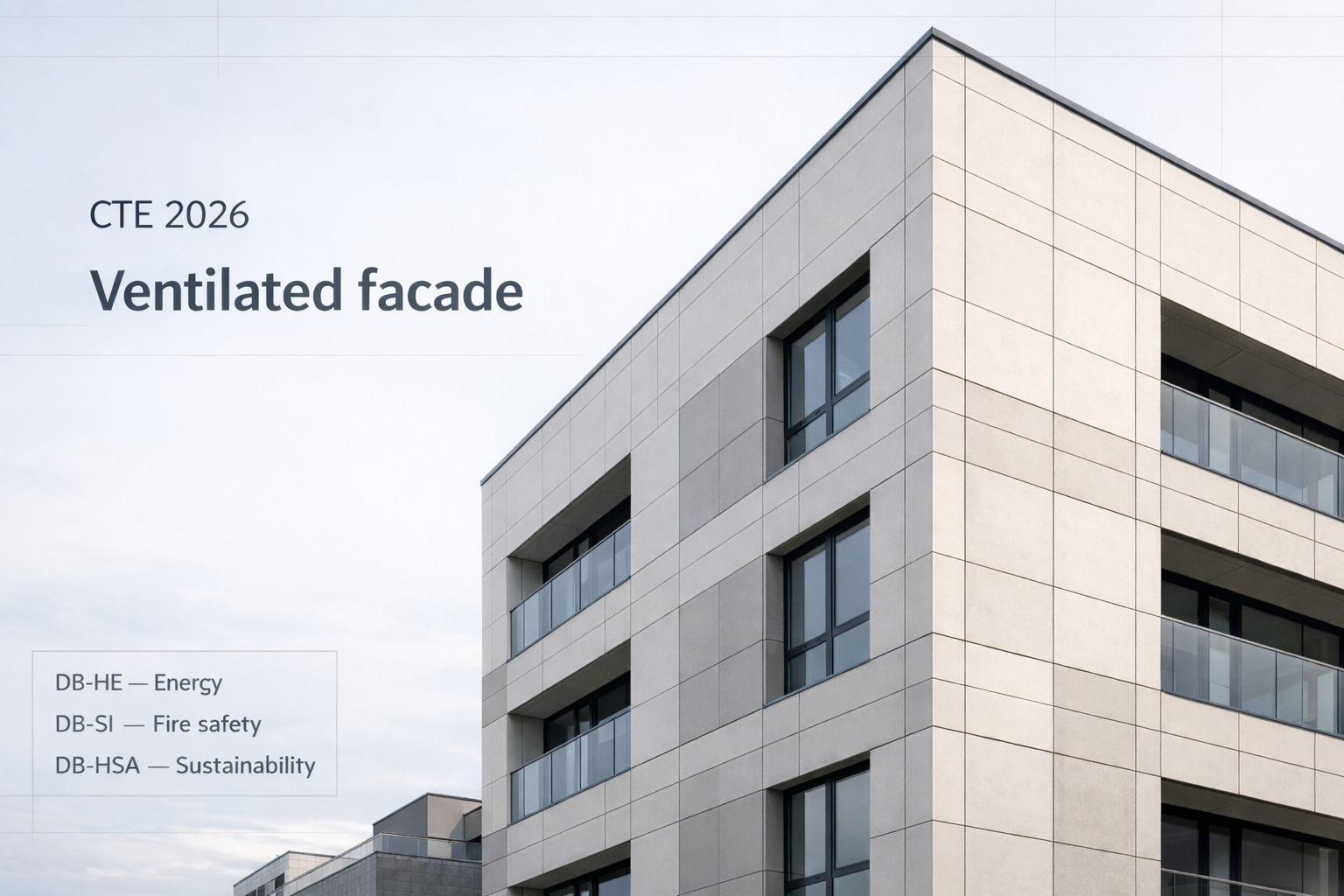

The Campanar Building Renovation: A Ceramic Ventilated Facade and Comprehensive Safety

Contemporary architecture is currently facing a critical challenge that goes beyond esthetics: the ability of building envelopes to guarantee the safety and well-being of those who live inside. Following the tragic events of February 2024, the renovation of the building in the Campanar district of Valencia is not only a reconstruction project, but has also become a benchmark for engineering and passive safety throughout Spain.
At FAVEKER®, we had the opportunity to participate in this rehabilitation project by supplying the building’s new outer skin. From the outset, the objective was clear: to transform the envelope into an impenetrable barrier through a ceramic ventilated facade system designed under strict fire protection criteria.
Passive Safety of the New Campanar Building Facade: An Integrated Fire Protection System
The effectiveness of a facade in the event of a fire does not depend solely on the external cladding, but rather on the performance of the entire system. The solution implemented on the Campanar building is an integrated passive safety system comprised of five layers that work together:
1. Ceramic Panels in the Reconstruction of the Campanar Building
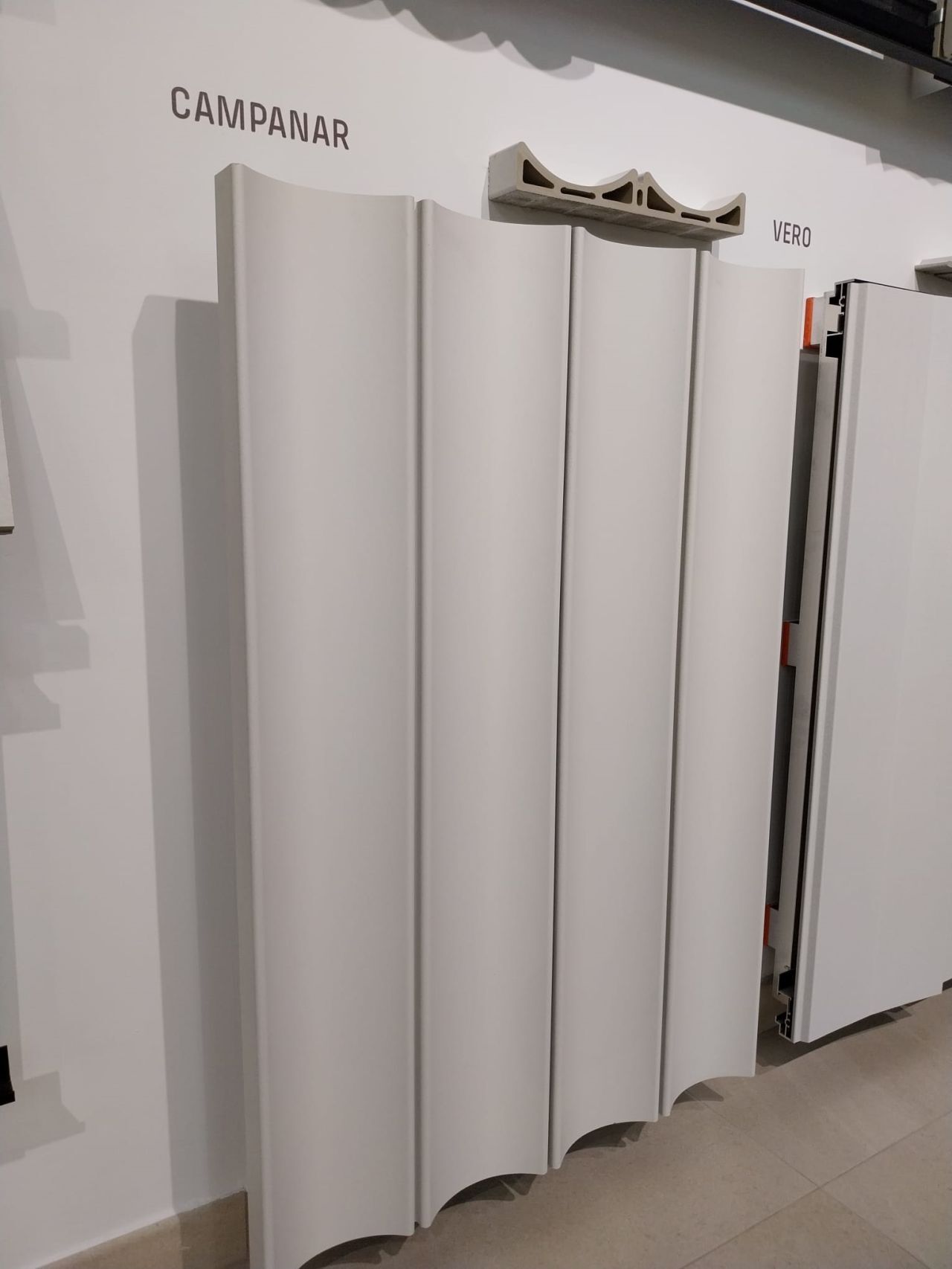
The first protective barrier, completely non-combustible. In this case, it is the GA20 Campanar panel. Extruded porcelain is a material that does not contribute to fire spread and offers low water absorption, high density and excellent dimensional stability—qualities that make it ideal for providing the utmost protection. In addition, the extrusion process allows the cross-section of each panel to be shaped, enabling the development of specific geometries tailored to the project.
In the case of the Campanar building, the panels were custom-designed by FAVEKER® in collaboration with the architecture studio ARQUEHA, adjusting their proportions, relief and modulation to the new interpretation of the building’s volume. This level of customization turns the ceramic skin into an active element of the architectural composition, capable of adding rhythm and depth. As a result, beyond safety and energy efficiency, this selection also provides an attractive and contemporary look.
2. Specific and Custom Mechanical Anchoring
This new fixing system, called FTS508, was developed specifically for this panel by Saltoki-Louvelia. It consists of a 40×40 tubular vertical framework that is attached to the wall using support and retention brackets. Horizontal profiles are then installed over these vertical elements, followed by the fixing clips for the GA20 Campanar ceramic panels. This layer is completed with the metallic substructure of the facade, which forms a solid framework that maintains the system’s integrity. It was designed according to strict criteria for fire safety, thermal and acoustic comfort, and long-lasting quality.
3. Rock Wool Insulation
Unlike other materials, rock wool is a mineral insulation that is non-combustible and acts as a thermal barrier—one more layer of safety within the overall system.
4. Intumescent Barriers in the Cavity
The performance of this element in the event of a fire is crucial. Essentially, these obstacles act as compartmentalization or firestop barriers that expand to seal the ventilated cavity, interrupting the chimney effect and preventing fire from spreading along the exterior of the facade. At the same time, they allow airflow as long as there is no fire, supporting the ventilated facade’s natural ventilation.
Combined with non-combustible materials such as the ceramic cladding and insulation (rock wool or fiberglass), this element helps make the ventilated facade the safest construction option, minimizing fire risk while remaining sustainable due to its higher energy efficiency.
What Sets FAVEKER® Apart in the Renovation of the Campanar Building
FAVEKER®’s involvement revolves around three cornerstones that define our DNA: rigorous certification, excellent ceramic materials and an unprecedented level of technical customization. We do not simply supply components; we provide a comprehensive engineering solution designed to deliver the highest performance.
International Validation: A Certified System
FAVEKER®’s complete systems have undergone large-scale fire propagation tests at the laboratories of Thomas Bell-Wright International Consultants, an organization accredited under ISO/IEC 17065. These tests include evaluations according to the SBI (Single Burning Item) standard under UNE-EN 13823, a European method for assessing reaction to fire. This validation of the assembly’s performance under real conditions is far more rigorous than tests of individual components, exceeding current regulatory requirements in Spain and ensuring the system’s stability in critical scenarios.
The Heart of the Envelope: A1 Extruded Porcelain
The distinguishing feature of the new Campanar building is the use of vitrified extruded porcelain. This material was selected for its exceptional technical properties, notably its A1 fire reaction classification according to UNE-EN 13501-1. This rating ensures that the ceramic is non-combustible and does not contribute to the fire at any stage, even when fully developed. In addition to being sustainable in terms of manufacturing and longevity, ceramic is a key element in the construction of safe buildings, as it prevents fire propagation.
Custom Engineering: Technical Personalization of Anchors and Panels
The uniqueness of the Campanar renovation required a specific technical development by FAVEKER®, where customization played a key role:
- Custom anchors: In collaboration with Saltoki-Louvelia, we developed a tailor-made mechanical anchoring system that ensures the solid and precise fixing of each panel, allowing for thermal expansion and extreme wind pressures without compromising safety.
- Exclusive panels: Thanks to the versatility of the extrusion process, we manufactured panels with specific geometries and technical grooves for this project. This bespoke solution enables a millimeter-perfect fit with the framework, optimizing both passive safety and the final look.
Advantages of the Ceramic Ventilated Facade in the Renovation
Beyond safety, choosing a ceramic ventilated facade in renovation projects offers cross-cutting benefits that enhance both quality of life and property value:
- Energy efficiency: The system provides continuous ventilation, reducing heat gain in summer and preventing thermal losses in winter, for optimized energy consumption.
- Sustainability and health: We use high-quality clays to create durable and recyclable products. Additionally, applying biocidal surfaces can contribute to healthier architecture.
- Low maintenance: Porcelain stoneware is extremely resistant to weathering and solar radiation, maintaining its esthetic appearance for decades without costly interventions.
Innovation and Safety in Building Renovations: The FAVEKER® Commitment
Our involvement in the renovation of the Campanar building reflects our commitment to developing construction solutions that combine innovation, energy efficiency and comprehensive building protection. At FAVEKER®, we continue to advocate for ceramic ventilated facades as a key solution for safer, more sustainable and technically advanced architecture.
If you need more information for your new construction or renovation project, contact our Technical Office. We provide guidance on designing a ceramic facade that combines absolute fire safety with the esthetic innovation you’re looking for.