Passivhaus Architecture: The Ventilated Façade as an Efficiency Driver at IES Muskiz

Contemporary architecture has a clear objective for 2030 and 2050: decarbonization and maximum energy efficiency. In this context, the Passivhaus standard has moved beyond being a trend to become a benchmark for responsible construction. But how can this level of thermal performance be achieved without compromising design or durability?
The answer lies in the building envelope. In this article, we explore why ceramic ventilated façades are a strategic component for Passivhaus buildings and how this concept is applied in one of our most recent projects: IES Muskiz.
The 5 Passivhaus Principles and the Role of the Building Envelope
Designing a passive house or nearly zero-energy building requires rigorous control of energy demand. The goal is to achieve maximum indoor comfort while minimizing the need for active heating and cooling.
To obtain Passivhaus certification, the design must comply with five fundamental principles, in which the façade plays a key role:
- High-performance thermal insulation
- Elimination of thermal bridges
- Airtight construction
- High-efficiency windows
- Mechanical ventilation with heat recovery
This is where FAVEKER®’s ventilated façade system becomes a high-value construction solution. It not only meets the technical requirements but also protects the structure and ensures the long-term durability of the building.
Why Is a Ventilated Façade Ideal for Passivhaus Projects?
Technically speaking, the ventilated façade is one of the most comprehensive solutions for sustainable construction. By separating the exterior cladding from the structure through an air cavity and incorporating continuous insulation, several physical advantages are created that reinforce the principles of passive architecture:
- Elimination of thermal bridges. The anchoring system and continuous external insulation prevent localized energy losses at floor slabs and columns. This is essential for achieving the energy balance required by Passivhaus standards.
- Chimney effect in summer. While Passivhaus design focuses heavily on retaining heat during winter, preventing overheating is equally critical in warm climates such as Spain. The air cavity creates natural convective ventilation that reduces direct solar heat gain and lowers cooling demand.
- Protection and durability. The ceramic façade acts as a protective shield against weather exposure. Made from high-quality extruded porcelain stoneware, it ensures extremely low water absorption, protecting both insulation and structure from moisture damage. In addition, UV radiation impacts directly on the ceramic surface—a material highly resistant to solar exposure that does not deteriorate or change over time—preventing radiation from affecting the building’s structural envelope.
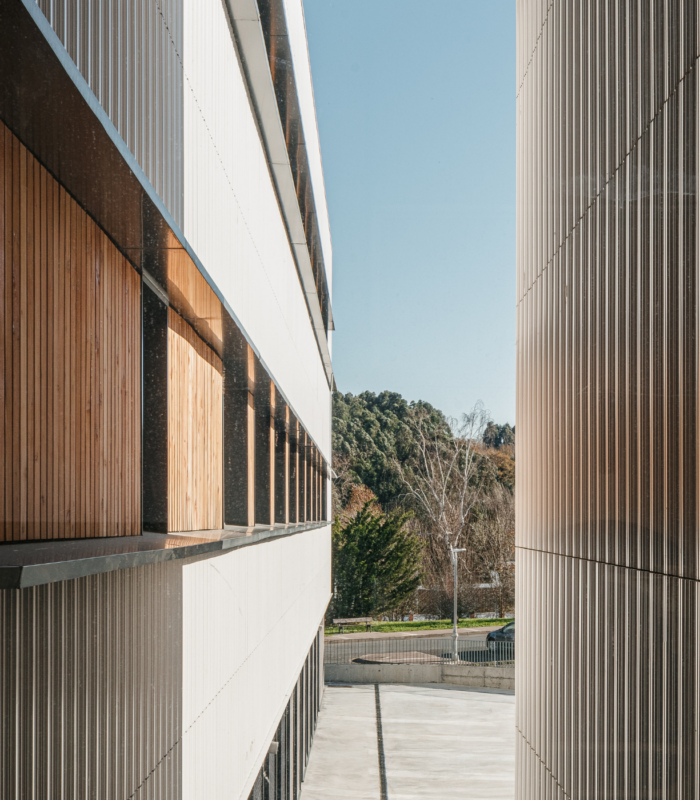
IES Muskiz: A Case Study in Modern and Sustainable Educational Architecture
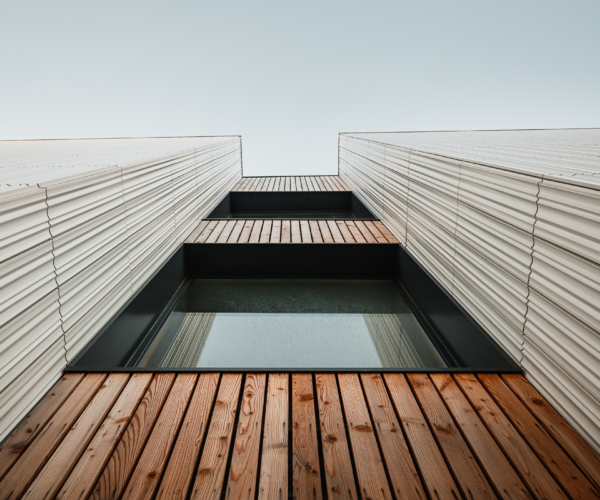
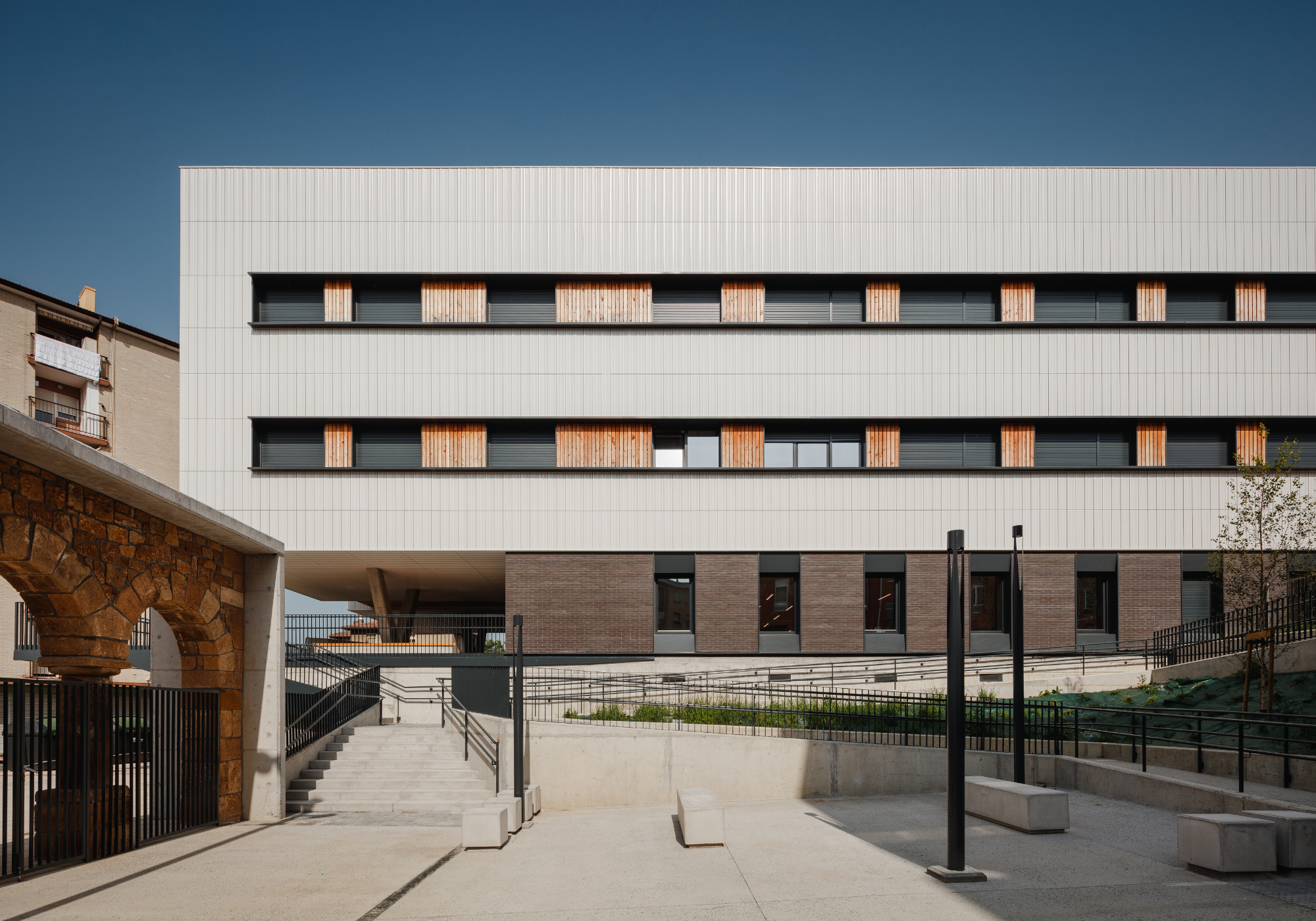
Theory becomes reality when it is applied rigorously on site. A clear example of how technology supports sustainable educational architecture is the new Secondary Education Institute in Muskiz (Bizkaia), designed by BAT Architecture.
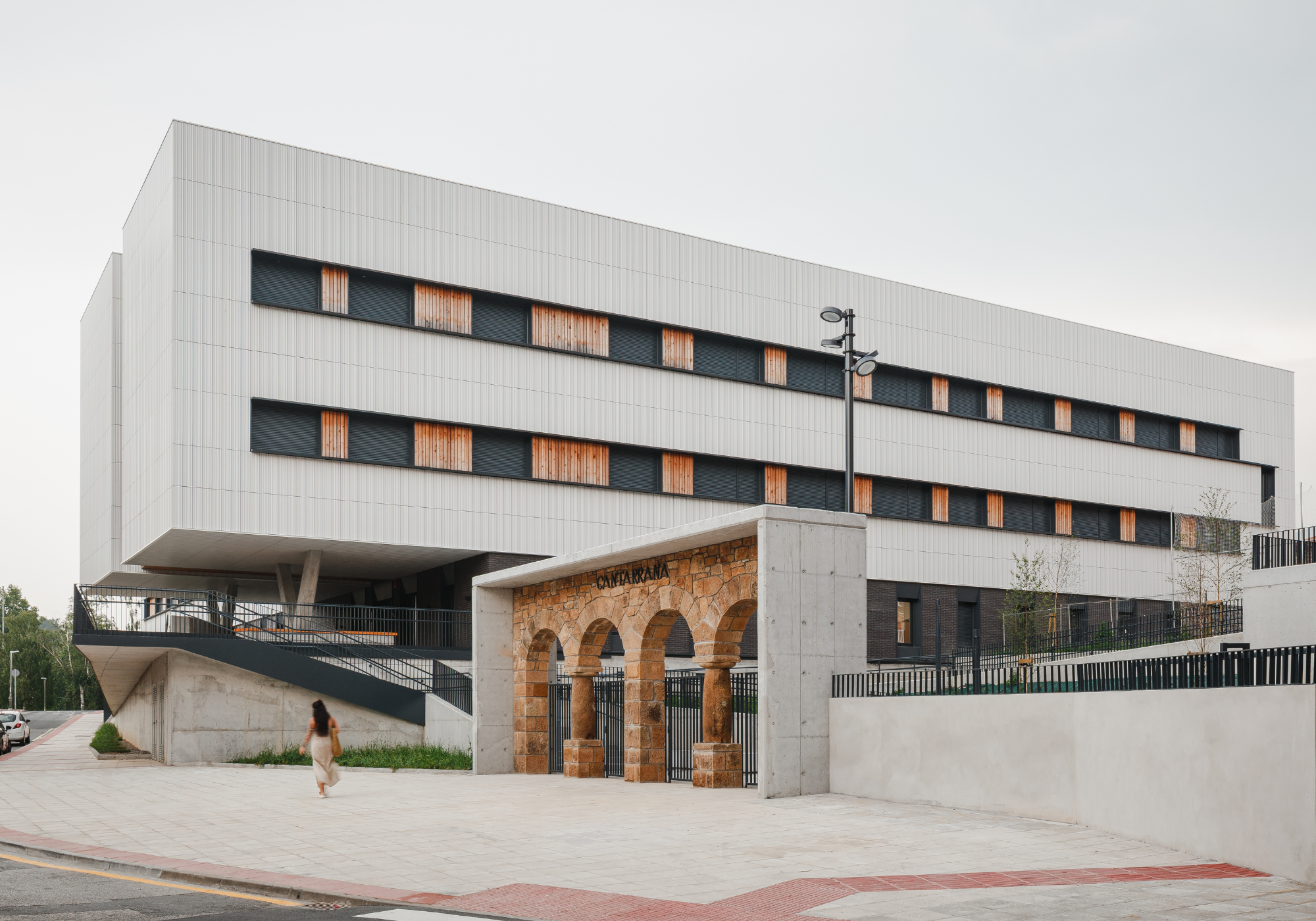
The building stands out for its architectural composition, organized into two longitudinal volumes connected by a central space. This layout not only encourages interaction, circulation and natural daylight but also highlights the combination of natural materials with cutting-edge technology.
The Challenge: Timber Structure, Volumetry and Passivhaus Comfort
IES Muskiz features a remarkable construction milestone: it is entirely built with a cross-laminated timber (CLT) structure, which reduces the carbon footprint while providing high thermal and acoustic comfort. CLT—cross-laminated timber—is composed of layers of wood boards stacked perpendicular to each other. Its main advantages include structural strength, versatility, natural aesthetics and, of course, sustainability.
This structural system is complemented by a ceramic façade designed to protect the timber from the demanding climate of northern Spain while meeting the strict requirements of Passivhaus design and the intensive use typical of a school environment.
Conceived in this way, IES Muskiz is more than just an educational building. It is a statement about how future public spaces should be designed: efficient, healthy and aesthetically integrated into their urban surroundings.
The FAVEKER® Solution: Partnership with Louvelia – Saltoki
For this project, the solution was not a standard cladding system but a custom development created in collaboration with the technical team at BAT Architecture and through comprehensive technical cooperation with our specialist partners Louvelia – Saltoki. Their expertise in façade engineering and high-performance material distribution was key to the success of the project.
The selected system consists of a ventilated façade using GA16 Muskiz panels—lightweight and highly durable—combined with the FTS 505 system.
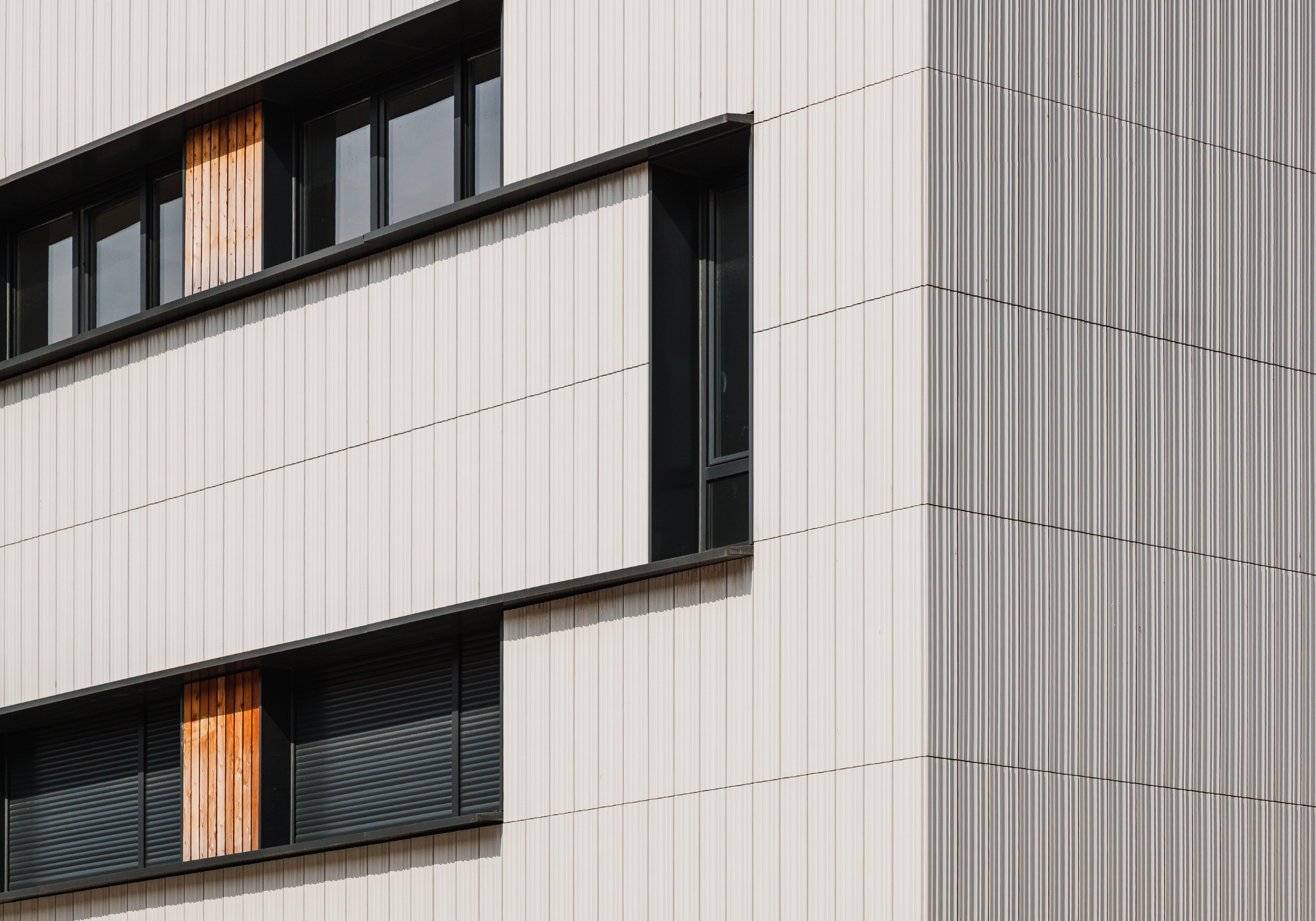
- Custom piece with a wavy profile, known as GA16 MUSKIZ. To break the horizontal lines of the volumes and introduce rhythm to the façade, a specially extruded ceramic piece with a wavy vertical relief was developed. Its neutral, luminous tone enhances natural light, improving visual comfort while reinforcing the sense of balance that defines the building’s final design.
- FTS 505 Fixing System: Safety and structural stability are ensured through this substructure system. It provides a robust mechanical fixing that adapts perfectly to the geometry of the Faveker pieces. The system allows for precise and efficient vertical installation while maintaining the air cavity required for optimal thermal performance without compromising the façade’s clean aesthetic.
Discover all the technical details and the full image gallery of the IES Muskiz project in FAVEKER’s portfolio.
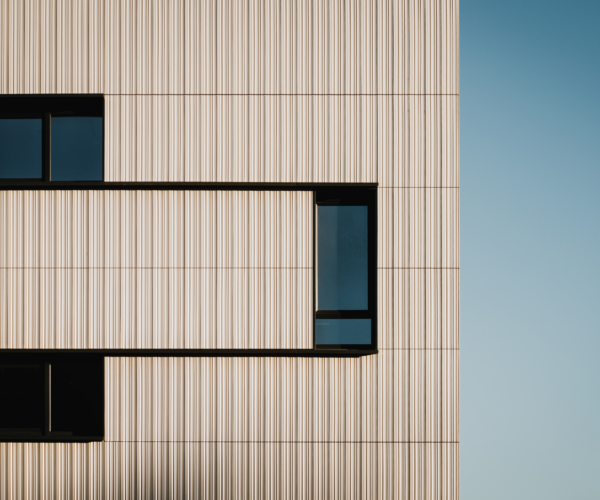
Wood and Ceramic: Sustainable Building Materials
As in emerging coliving models, educational buildings also require healthy, durable materials. When the goal is efficient and environmentally responsible construction, timber structures and ceramic cladding stand out as an ideal combination. FAVEKER® ceramic panels are manufactured through extrusion processes using high-quality clays—an inert, 100% recyclable material with exceptional durability. This production method contributes to the overall sustainability of the project and can support the achievement of certifications such as LEED or BREEAM.
Planning to Certify Your Next Building?
Passive architecture is no longer the future—it is the current regulatory and ethical standard of our profession. Whether you are designing a building aiming for Passivhaus certification or simply pursuing the highest level of energy performance, the building envelope is where the process begins.
At FAVEKER®, we collaborate with architects and construction companies from the earliest design stages to ensure that the façade meets both aesthetic expectations and the most demanding technical requirements. If you have a project in mind, contact our Technical Office. We will help you design a ventilated façade system that combines energy efficiency, contemporary architecture and long-term sustainability.